As I was browsing the web this morning I came across this interesting study conducted in Watsonville, California. For those of you who do not know, Watsonville is one of the highest yielding berry regions in the United States. Watsonville is where companies like Driscolls have established headquarters.
The study was conducted over 2 years and involved 13 pairs of organic and conventional berries. Overall, the studies showed that organic strawberries had longer shelf life, higher antioxidant amounts, and higher level of vitamins C. However, the conventional berries had higher amounts of potassium and phosphorus both materials promote dietary function.
“Our findings show that the organic strawberry farms produced higher quality fruit and that their higher quality soils may have greater microbial functional capability and resilience to stress. These findings justify additional investigations aimed at detecting and quantifying such effects and their interactions.”
Furthermore, the organic fruit was found to be sweeter, contain higher soil nutrient levels, and be nicer in appearance. The organic strawberries were found to be smaller in size compared to the conventional, which is quite common.
We have found that the demand for organic products is growing each year and we have allocated more acreage to organic strawberry production this season. We are looking forward to the increase in organic production so be sure to look for it on your retailer’s produce section.
A new study presented at the National Meeting of the American Chemical Society shows that compounds found in berries helps slow down the aging process in the brain. As we age brain activity tends to naturally decrease because of increases in oxidation and toxic buildup. The brain has a natural “house keeper” process that identifies toxins and build-up in the brain and works to eliminate them. The compounds known as polyphenols found in berries works to stimulate these “house keeper” processes keeping the brain prime.
The toxins and buildup in the brain can cause memory loss, cancer, and degenerative brain diseases. Previous studies have shown that the antioxidants found in berries are natural cancer fighters and promote other healthy body function. Further studies done with mouse brain tissue show that aged tissue stopped working properly and when introduced with these polyphenols the “house keepers” became energized.
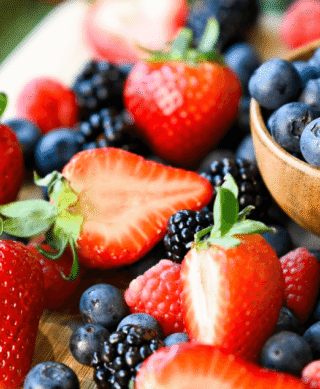
So, today’s lesson is make sure to make strawberries, raspberries, blueberries, and black berries part of your regular diet and your brain will thank you. As a reminder we will start harvesting strawberries in late November!
There is currently legislation in the Senate for food safety reform. Bundled into this proposed legislation are various items including a potential ban of the chemical Bisphenol A in food and beverage containers. This chemical ban amendment was brought forward by Dem. Senator from California Dianne Feinstein. Perhaps the proposed amendment causing the most debate is one proposed by Senator Jon Testor Dem. from Montana. Testor’s amendment looks to limit the food safety regulation to businesses that do less than $500,000 gross income.
We all know that food safety does cost $$$, and that increased costs for any business makes it hard to be competitive. However, if everyone has to play by the same rules it should be a level playing field minus the economies of scale that larger companies enjoy. Food safety is an issue that everybody across the supply chain needs to place heavy importance on, no matter if you are a sole proprietor or CEO of a Fortune 500 company. Consumers want to know that their food supply is safe, and this requires the same rules and regulations across the entire industry.
If there is going to be any adjustment of the proposed rules it should be based on commodity. Research has shown that certain commodities are less likely to spread food bourne illness, and just the method that they are harvested makes them less susceptible.
I am interested to see how this works itself out. These two proposed amendments to the bill could delay the Senates decision when they reconvene in September. I will be following this issue closely.
We just finished up with Agritech which was held on Tuesday and Wednesday of this week. Agritech is a smaller expo that has participants from all sectors of the industry including growers, packaging companies, equipment providers and solution providers just to name a few. This was our first year of being an exhibitor at AgriTech and we had the opportunity to chat with some of our existing relationships and made a few new ones.
The big surprise to the event would have to be the unscheduled arrival of Florida governor hopeful Rick Scott. Scott along with his entourage came and took a stroll around the expo. He was accompanied for a majority of the time by Fancy Farms grower Carl Grooms. Carl is a media darling for the Florida strawberry industry, and gave Scott the guided tour. Whether this was a spontaneous action for Scott or not, his decision to show up at Agritech shows the importance of agriculture in Florida. Agriculture is a big business for this state along with tourism and the governor of Florida needs to be fluent with the issues our industry faces. You can find pictures of Scott along with Carl Grooms below or on Wishnatzki Farms Facebook page
We just finished up with Agritech which was held on Tuesday and Wednesday of this week. Agritech is a smaller expo that has participants from all sectors of the industry including growers, packaging companies, equipment providers and solution providers just to name a few. This was our first year of being an exhibitor at AgriTech and we had the opportunity to chat with some of our existing relationships and made a few new ones.
The big surprise to the event would have to be the unscheduled arrival of Florida governor hopeful Rick Scott. Scott along with his entourage came and took a stroll around the expo. He was accompanied for a majority of the time by Fancy Farms grower Carl Grooms. Carl is a media darling for the Florida strawberry industry, and gave Scott the guided tour. Whether this was a spontaneous action for Scott or not, his decision to show up at Agritech shows the importance of agriculture in Florida. Agriculture is a big business for this state along with tourism and the governor of Florida needs to be fluent with the issues our industry faces. You can find pictures of Scott along with Carl Grooms below or on Wishnatzki Farms Facebook page http://www.facebook.com/?ref=logo#!/pages/Wishnatzki-Farms/138662191052?ref=ts
There is legislation currently looking at a possible tax on junk food, vending machines in schools, and boosting meal payments to schools. This bill is in the House looking for approval, and is being heavily pushed by Michelle Obama who wants to see more fruits and vegetables in schools. This is in an attempt to fight childhood, which has been rapidly growing in this country. However, is a possible tax on these “bad” foods the way to modify consumers eating habits? Some proponents look at it as attacking the lower income level individuals who rely on these foods because they are less expensive.
There is the question will junk food be the next tobacco? It looks like the government wants to tell you that these certain bad foods are bad for your health and therefore your consumption of these foods is irresponsible and a burden on our health care system. There are claims that obesity in the United States costs $150 billion, and perhaps if these foods were made more costly because of a tax there consumption would decline. I personally believe that an increase in costs of these foods will only have a minimal effect. People make conscious decisions everyday and one of them is “what am I going to eat?”. I know that we live in a fast paced world where we want everything quick, easy, and cheap. There are still ways to eat healthy on the go, does it cost a little more than the $3 value meal at McDonald’s or Wendy’s, you bet. The health benefits will pay dividends in less medication and doctors visits.
I think changing people’s eating habits can be solved using another approach. We must provide fruits and vegetables in bulk to all public schools. If kids from a young age make fruits and vegetables part of their daily intake they will create a habit that should last for a lifetime. This should also be reinforced by parents at home. Parents should make healthy foods including fruits and vegetables available to their kids. This is a cycle that needs to be started and made a priority across all households in America.
Is this proposed legislation to tax certain foods the answer??… No. However, at least we know that it is a problem and that something needs to be done. People need to feel incentivized to make healthy decisions and clearly some people do not. We are a country of freedoms and the ability to make choices, let’s see if Americans start making more healthy choices. What do you think?
This summer while most things agriculture have slowed down in Florida places like North Carolina, Michigan, Jersey, and California are full steam ahead. Wishnatzki Farms is selling product out of Franklin, North Carolina. Some of the products being grown are bell pepper, Roma tomatoes, vine ripe tomatoes, grape tomatoes, blackberries, and very soon raspberries.
Raspberries are like strawberries in that they are full of health benefits and traditionally a summer fruit. Raspberries are full of Vitamin C and ellagic acid which has been shown to prevent the growth of cancer cells and tumors. Furthermore, when you freeze raspberries they lose none of their health benefits. Fiber is also found in raspberries which regulates the digestive system and can be part of a weight loss plan.
Perhaps the most beneficial property of raspberries are their antioxidant properties. Raspberries contain 50% more antioxidants than strawberries and an estimated 10x more than tomatoes. Many studies have shown antioxidants to prevent damages to cells and DNA both of which are crucial to your health.
I can’t wait for the first flat of raspberries to make their way down to Plant City. Raspberries pair up quite nicely with a scoop or two of vanilla ice cream.
We have all heard the term “locally grown” and there have been deep conversations on what is considered locally grown. Some say it is product grown within 100 miles of where it is consumed. Others say that within the same state or even the same region of the country is locally grown. Well, it seems there is a new angle into classifying produce called Values-Based Supply Chain model (VSBC).
VSBC looks into focusing on the people or organization behind the product. Consumers want to know who grew their produce and when they can identify with that grower there is a sense of loyalty. The University of California-Irvine performed a study looking into the sourcing of local produce and the price discrepancies comapred to larger producers. A member from FreshPoint stated that sometimes the price difference can be as much as $4 for locally grown produce. Chainstore buyers look at price is one of the most important factors. Some of the larger cooperatives that have a mixture of large growers and smaller growers across the country are better suited to provide product from a closer proximity.
In a Values Based Supply Chain the grower must be accomodating, the distributor needs to be flexible with price as well as the chain buyer, and the consumer will need to pay a little more. In a perfect world when all parties conducted business like this the carbon footprint would be minimized and product would be of the highest quality.
Good morning everyone. Right now growing operations in Florida are at a minimal because of the extreme summer heat. We are currently selling product out of Franklin, North Carolina. We are selling produce marked under the Norton Creek and Smokey Mountain labels. Some of the products being grown are bell pepper, Roma tomatoes, vine ripe tomatoes, blackberries, and raspberries; check out our Facebook page for some North Carolina product pics http://www.facebook.com/pages/Wishnatzki-Farms/138662191052?v=photos&ref=ts#!/album.php?aid=191313&id=138662191052 .
We have diverted a great deal of our time and energy into the development of FireTag. As I have mentioned in previous articles the Produce Traceability Initiative has extended their milestones a year back because the industry as a whole in not prepared to deliver product traceability. We have been using FreshQC for a couple years and benefited tremendously through improved quality. The produce industry needs to realize that traceability is not just an increased cost of doing business (it is a cost), but it can have value if you take it as an opportunity to increase accountability throughout the harvest chain. We have received valuable feedback from the consumer on what they like and don’t like about our product and trends throughout the season. VirtualOne has recently just developed another technology called FireTag.
FireTag provides case-level traceability by burning a mark using a vision guided laser. The system is able to identify the product and burn a GS1 mark on the product case. This mark includes a 2D barcode which can be scanned throughout the supply chain as well as a human readable element. FireTag is fully automated eliminating a majority of the labor component needed with other traceability solutions. Furthermore, because it uses a Macsa laser to burn a mark it does not require the consumables used with print and apply solutions. Other traceability solutions use labels which are printed on demand which is not only time consuming, but also generates waste. FireTag is definitely a Green alternative with regards to traceability. Check out the video below to see FireTag in action!
I was cruising around a couple of produce industry websites and noticed an article discussing the latest food safety research symposium held at the University of California Irvine late last week. The symposium had several industry participants as well as key research faculty from the University of California. While there were several sessions the one that caught my attention was one discussing the role of government in the produce industry. Food safety has been a major concern for the industry and several documents have been drafted and put in place including the Produce Traceability Initiative.
The main question is what is governments role in implementing a traceability guideline? Currently, the produce industry has the ability to create its own practices and see that all handlers have the ability to trace their product back to the field. I personally think that government will be forced to step in and see that the proposed guidelines are followed. However, I do not think that the government should have any involvement in creating the guidelines themselves. Hopefully industry leaders are smart and see that they have this once chance to create a set of guidelines that is applicable across the entire industry and a technology comes forward that can be an industry solution. Researchers have received several federal grants allowing them to evaluate and develop methods for industry traceability and also members of industry have donated funds for research as well, including Taylor Farm’s contribution of more than $2 million.
I have heard several comments that industry leaders would like only certain commodities to be required to have full traceability. Also, that because certain items are more prone to spreading food borne pathogens that they have more stringent requirements. I do agree that certain items have a higher risk factor for harboring pathogens, but in order to ensure we have the safest food supply possible any legislation should be applied across the entire industry. More importantly, this legislation should be applied to all imported product as well. It would be detrimental to impose requirements on U.S. growers and ask them to burden an increased cost of doing business and not ask the same of his foreign counterpart.
I would like to see guidelines supported by legislation in the very near future. Food safety is of major concern to consumers and it is disheartening to see outbreaks where people are sick and an entire commodity is to blame and not just the grower who had the contaminated product. Wishnatzki Farms has been very proactive with regards to current traceability guidelines and are working hard to stay ahead of the curve.
The hard freeze that hit Florida this year did not just effect the Florida strawberry crop it is also taking its toll on Florida’s spring crops. The freeze pushed back the harvest of many crops this spring. By delaying a crop just a couple weeks can wreak havoc on market prices. Growers plant their crops to yield within certain “windows”, these windows generally result in a healthy market for the product. The freeze upset these windows and many spring crops were hitting their peak yields when other areas were also peaking i.e. Georgia. This does not just hurt the Florida grower, but also effects the other areas of the country growing the same product.
This happened in a variety of crops this season, but maybe most notably in tomatoes. When tomatoes were a scarce product just a few months ago, restaurants were commonly out or only available upon request. Now, there is an excess amount of tomatoes and the market price has lowered to a point that has forced many growers to quit. It had gotten to a point where the United States Department of Agriculture (USDA) decided it needed to tighten up the inventory with the purchase of $6 million worth of Florida tomatoes. These tomatoes will be used in national food assistance programs and other federal programs. I am a big fan of true capitalism and letting the market set the prices, and this is just an example of a new buyer entering the market because of an opportunity. Other crops besides tomatoes have been effected by the January freeze to some extent including: bell pepper, cantaloupe, and blueberries.
Wishnatzki Farms is looking forward to a great fall crop and remainder of our Summer/Spring deal.